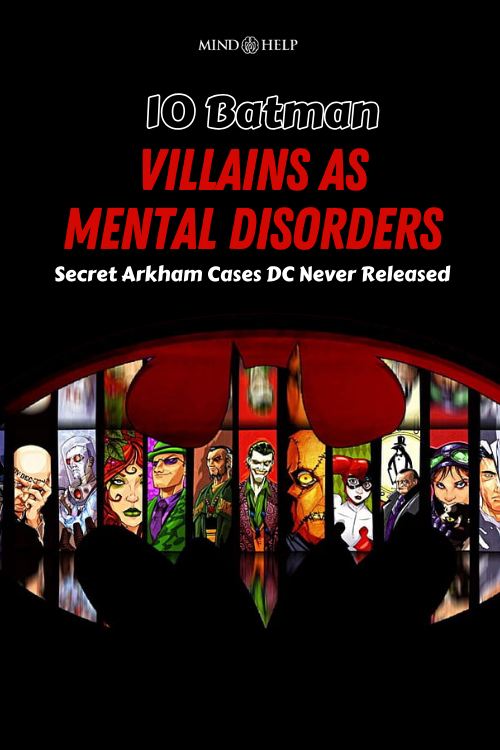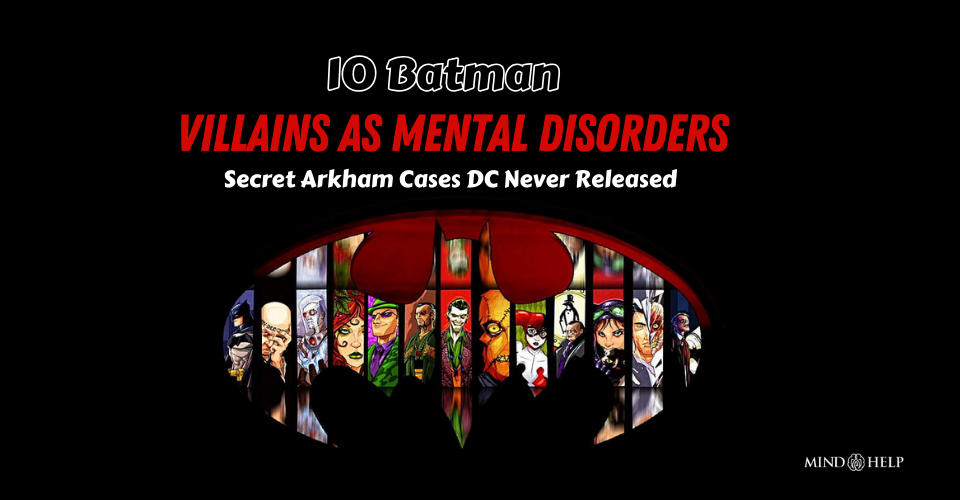
Arkham Asylum wasn’t just a prison for Gotham’s worst, it was a psychological labyrinth where every cell held a villain shaped by trauma, obsession, or a fractured identity. That’s why we’ll closely look at Batman villains and mental illness to reveal darkness that goes beyond costumes and crime.
Each character in DC is a chilling reminder that the human mind can be its own supervillain. And we’ll explore 10 Batman villains and their mental disorders, uncovering the disturbing psychological truths that DC never explicitly told you.
The psychology of batman villains tell stories that reflect fear, trauma, obsession, grief, and the emotional battles we all face. So let’s explore batman villains and their mental disorders and uncover why these characters feel so real despite being fictional.
10 Batman Villains And Mental Illness
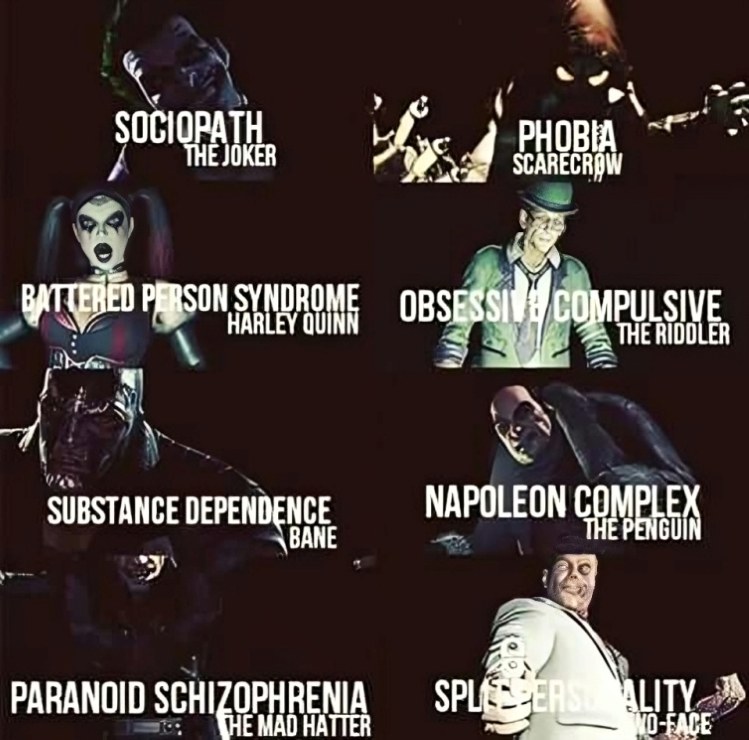
1. The Joker – Sociopath And Pseudobulbar Affect
The Joker represents the extreme end of emotional detachment, someone who feels nothing deeply but forces everyone else to feel everything at once. His sociopathy fuels chaos without remorse, and his Pseudobulbar Affect turns involuntary laughter into something unsettling. His mind is the reminder that when empathy disappears, destruction follows.
2. Harley Quinn – Histrionic Personality Disorder And Battered Person Syndrome
When talking about Batman villains mental illness, Harley Quinn is the perfect example. She is dramatic, intense, and magnetic. Her histrionic traits make her crave emotional highs, while Battered Person Syndrome reflects her tragic entanglement in a toxic cycle with the Joker.
She showcases how even smart, capable people can lose themselves when love turns into manipulation.
Read more here: Stop Confusing Pop Psychology With Real Psychology – Learn The Difference!
3. Two-Face – Dissociative Identity Disorder/ Split Personality
Harvey Dent’s transformation into Two-Face symbolizes the violent clash between who we are and who we could become after trauma. His fictional representation of Dissociative Identity Disorder shows how a single moment of pain can split the mind into conflicting identities, one fighting for justice, the other for vengeance.
4. The Riddler – Autism Spectrum Disorder And Obsessive-Compulsive Traits
Edward Nygma hides insecurity under riddles, routines, and superiority. His obsessive tendencies and social disconnect reflect Autism Spectrum-related and OCD-like traits as portrayed in fiction. His entire persona is a battle to prove he’s not invisible, something many people understand in quieter ways.
5. Scarecrow – Phobia
Jonathan Crane’s life revolves around one thing: fear. Instead of running from it, he studies it, weaponizes it, and uses it to control others. His phobias fuel a twisted fascination with the very emotions that once overpowered him. He’s the embodiment of “becoming what you fear.”
6. The Penguin – Napoleon Complex And Narcissism
The Penguin’s rise to power is fueled by insecurity. His Napoleon Complex and narcissistic traits push him to dominate a world that once rejected him. He reflects the dark side of overcompensation, the need to be feared because being ignored hurts too much.
7. The Mad Hatter – Paranoid Schizophrenia
Jervis Tetch drifts into Wonderland when reality becomes too painful. His hallucinations, delusions, and paranoia (fictionally portrayed as Paranoid Schizophrenia) turn fantasy into obsession. He shows how the mind can escape into imagination when real life feels threatening.
8. Bane – Substance Dependence
Bane’s strength comes from Venom, but so does his downfall. His fictional Substance Dependence mirrors the real-world cycle of addiction: a rush of power, a crash, and a life built around the next dose. His identity becomes chained to the substance he relies on.
9. Mr. Freeze – Complex Bereavement Disorder
Mr. Freeze is powered by grief, not malice. Complex Bereavement Disorder traps him in a frozen moment of loss, making him unable to move forward after losing his wife. His villainy stems from love that’s become desperation.
10. Black Mask – Sadistic Personality Disorder
Roman Sionis doesn’t simply crave control; he relishes inflicting pain. His Sadistic Personality Disorder cements his position as one of Gotham’s most ruthless villains. His cruelty is a manifestation of power used as a substitute for deep emotional void.
Read more here: How Does Childhood Trauma Affect The Brain? 4 Emotional Wounds
Exploring batman villains mental illness shows us something surprising, Batman doesn’t just fight criminals, he fights the parts of the human mind that can twist pain into something dangerous.
And maybe that’s why Gotham’s villains stick with us. What do you think about the psychology of Batman villains?
Disclaimer: This article is not intended to diagnose any individual with a mental health condition. The terms used are for discussion and storytelling purposes only and should not be considered medical or psychological advice.