The Winter Solstice is often described as an astronomical milestone marking the longest night and shortest day of the year. Yet long before it became a calendar event, it held deep symbolic meaning across cultures. For many ancient societies, it was a psychological and seasonal threshold rather than merely a celestial one. What we now recognize as Pagan rituals for Winter Solstice emerged from a human need to make sense of darkness, uncertainty, and renewal.
These practices helped communities process fear, loss, and hope during the most challenging time of the year. Today, they continue to resonate as grounding and reflective traditions.
Before exploring specific Pagan traditions for Winter Solstice, it helps to understand why this time of year carried such significance in the first place.
Read: What Is a Golem? A Psychological Look at a Myth That Blurs Creation, Control, and Protection
Winter Solstice and Pagan Traditions: The Meaning of the 12 Days of Yule
Long before modern religious calendars, the Pagan celebration of Winter Solstice marked a crucial turning point in the seasonal cycle. Occurring around December 21 in the Northern Hemisphere, the solstice represented both an ending and a beginning.
For ancient Pagan cultures across Europe, the longest night symbolized vulnerability and uncertainty. At the same time, it marked the moment when daylight would slowly begin to return. From a psychological perspective, this transition offered reassurance that darkness was temporary rather than permanent.
Because of this, Winter Solstice and Pagan traditions often focused on rebirth, endurance, and trust in natural cycles. Solar deities were honored not for dominance, but for their resilience. The return of light became a metaphor for survival, renewal, and emotional continuity.
The Pagan Holiday Winter Solstice was closely tied to Yule, a festival spanning the 12 Days of Yule. Beginning on the solstice itself, this period allowed time for rest, communal bonding, and reflection rather than immediate celebration.
During these days, Pagan Winter Solstice traditions emphasized slowing down, acknowledging grief or hardship, honoring ancestors, and preparing mentally and emotionally for growth in the months ahead. Darkness was not rejected, but respected as a necessary pause before renewal.
When Is the Winter Solstice in 2025?
For those wondering when is the Winter Solstice, it will occur on Sunday, December 21, 2025, in the Northern Hemisphere.
Winter Solstice 2025 will once again mark the shortest day and longest night of the year, making it an ideal moment for reflection, intention-setting, and symbolic rituals rooted in ancient Pagan Winter Solstice rituals.
5 Pagan Rituals for Winter Solstice: Ancient Wisdom for Modern Life
Below are five Pagan rituals for Winter Solstice that can be adapted for contemporary life while retaining their original psychological and symbolic meaning.
1. Burning a Yule Log on Winter Solstice
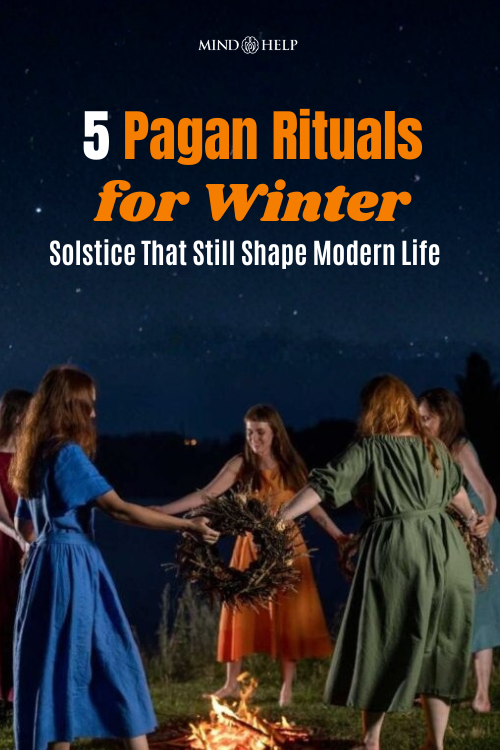
Among Germanic and Norse Pagan Winter Solstice traditions, burning a Yule log symbolized continuity, protection, and resilience during winter’s harshest period.
The log was carefully chosen and burned on the longest night, representing the gradual weakening of darkness and the steady return of light. From a psychological standpoint, fire served as reassurance that warmth, safety, and life persisted despite external hardship.
Ashes from the log were often saved and used later as symbols of protection or fertility, reinforcing a sense of preparedness for the future.
Modern Practice
- Light a candle or small log to symbolize the returning Sun
- Write intentions or reflections and place them nearby
- Burn safely or use symbolic fire if needed
- Keep wax, ash, or written notes as reminders of renewal
2. Sun Rebirth Ceremonies
Across Roman and Indo-European cultures, the solstice marked the perceived rebirth of the Sun after its weakest point. These rituals acknowledged uncertainty while reinforcing trust in cyclical balance.
Light and fire were used not to deny darkness, but to coexist with it. Staying awake briefly during the longest night symbolized attentiveness to change and awareness of transition.
These ceremonies offered emotional reassurance during months of scarcity and reinforced faith in continuity rather than permanence.
Modern Practice
- Light candles at sunset on the Winter Solstice
- Reflect on renewal, recovery, or personal growth
- Stay awake briefly to mark the turning point
- Journal what you want to welcome back into your life
3. Evergreen Rituals and Sacred Greenery
In Celtic Pagan Winter Solstice traditions, evergreen plants represented life that endured despite external conditions. Pine, fir, holly, and mistletoe were brought indoors as reminders of resilience rather than abundance.
Mistletoe, in particular, was treated with respect due to its ability to thrive during winter. Psychologically, evergreen rituals reinforced the idea that life continues even when growth is not visible.
Modern Practice
- Decorate your space with pine, fir, or holly
- Use dried or symbolic greenery if needed
- Set intentions focused on endurance and protection
- Acknowledge winter as rest rather than loss
4. Ancestor Offerings and Spirit Feasts
Many Slavic and Celtic communities viewed the solstice as a time when boundaries between past and present felt thinner. Honoring ancestors provided emotional grounding during a vulnerable season.
Food, drink, or symbolic offerings acknowledged continuity between generations. These practices strengthened identity, memory, and resilience by emphasizing inherited wisdom and shared survival.
From a psychological perspective, ancestor rituals reinforced belonging and emotional stability during times of isolation.
Modern Practice
- Set aside food, drink, or flowers in remembrance
- Light a candle in honor of loved ones
- Speak or write their names
- Reflect on values or strengths passed down
5. Sacred Night Vigil and Silence
Rather than celebration, some Druidic and Nordic communities observed the solstice through stillness and silence. The longest night was treated as a necessary psychological pause.
Darkness was understood as a space for rest, release, and inward processing. Vigil practices allowed individuals to acknowledge endings without forcing immediate resolution.
This ritual emphasized patience, acceptance, and trust in gradual change.
Modern Practice
- Spend time in silence or dim light
- Reduce distractions and external noise
- Reflect on what has naturally ended
- Allow rest without seeking immediate clarity
Winter Solstice and Pagan Traditions Today
Many modern celebrations may feel familiar because numerous Pagan Winter Solstice traditions were later absorbed into other religious and cultural practices. Symbols of light, feasting, greenery, and reflection continue to shape seasonal rituals across the world.
Whether practiced spiritually or psychologically, these rituals offer grounding during Winter Solstice 2025. They invite us to slow down, honor transitions, and respect the role of darkness in growth.
So which of these Pagan rituals for Winter Solstice feels most meaningful to you this year?
Happy Yule and Winter Solstice.