Remember as a child tossing a blanket over your shoulders, striking a heroic pose, and imagining yourself as a fearless superhero ready to leap off the couch? If so, you’ve already experienced a glimpse of what psychologists call the Batman Effect.
It’s that fascinating phenomenon where stepping into the mindset of someone bold, disciplined, and unstoppable actually shapes your behavior. And here’s the exciting part—it doesn’t just work for kids. Adults tap into it all the time, often without realizing it. Whether you channel your “inner CEO” before a big presentation or take on a confident alter ego to tackle a challenge, you’re practicing a subtle but powerful psychological trick.
At first, it might sound a little whimsical, almost too good to be true. But the science behind it is both solid and surprisingly fun. Researchers have discovered that pretending to be a superhero isn’t merely entertaining—it’s an effective strategy to enhance focus, perseverance, and confidence.
Let’s explore what the Batman Effect is, why it works, and how it’s one of the most practical techniques for building confidence.
Read: 8 Everyday Traits of a Truly Strong Person That Prove You’re Stronger Than You Think
What Is the Batman Effect?
In a 2016 study, researchers wanted to see how well children could maintain focus during tedious, patience-testing tasks. Kids were asked to complete repetitive computer challenges, but with a twist: they were divided into three groups based on how they were encouraged to motivate themselves.
Group 1: The “I” Group
These children spoke in the first person:
“I’m doing great.” “I can keep going.”
Group 2: The “Name” Group
This group used their own names when cheering themselves on:
“Sarah is doing great.” “Jacob is trying his best.”
Group 3: The Superhero Group
Here’s where it got interesting. Kids were asked to adopt the persona of a superhero or admired character—Batman, Dora the Explorer, Buzz Lightyear, or anyone they liked—and speak as that character:
“Batman is focused!” “Buzz Lightyear won’t give up!”
The results were remarkable. Children who pretended to be superheroes outperformed the other groups, showing greater focus and persistence.
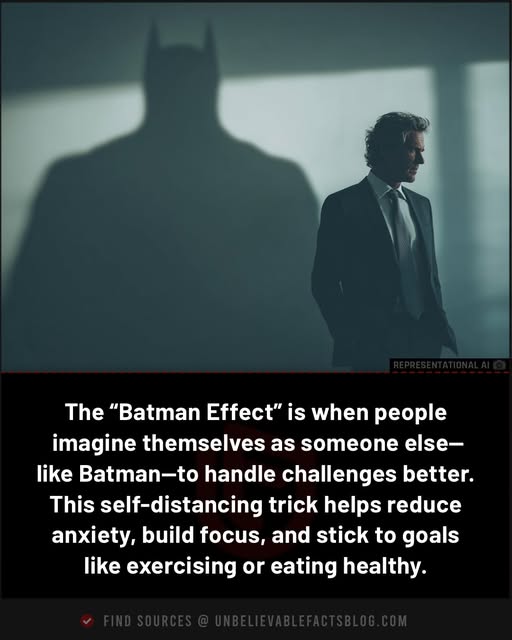
This playful form of psychological role playing is what we now call the Batman Effect: imagining yourself as someone brave, competent, and determined can literally influence how you act.
Why Pretending Actually Works?
The Batman Effect works because it taps into psychological distancing, allowing you to step outside your immediate fears, doubts, or frustration. By embodying someone heroic or capable, you create mental space that lets you act with more clarity and control.
Here’s why it’s so effective:
1. It Temporarily Shifts Your Identity
Labels like “I’m not good at this” or “I get distracted easily” can trap you in self-limiting behaviors. Adopting a confident persona allows you to borrow that identity for a moment. Instead of thinking, “I can’t handle this,” you start thinking, “Batman doesn’t give up, and neither do I.”
2. It Reduces Stress and Emotional Pressure
Pretending to be someone else creates a buffer between you and your emotions. The task no longer feels overwhelming—it becomes a mission to accomplish rather than a burden.
3. It Boosts Perseverance
Superheroes rarely quit halfway through a mission. When you adopt a heroic mindset, giving up feels unnatural. This temporary identity strengthens your determination and helps you stay focused longer.
Is This Just for Kids?
Absolutely not. While research often focuses on children, adults experience the Batman Effect in their own ways and can benefit tremendously from it. In fact, it’s one of the most effective methods to improve self confidence.
Everyday examples abound:
- Beyoncé famously created “Sasha Fierce” to embody stage confidence.
- Actors frequently rely on psychological role playing to fully step into characters and perform fearlessly.
- Public speakers visualize themselves as charismatic leaders to exude confidence before stepping on stage.
- Corporate professionals are encouraged to adopt a leadership persona during presentations and negotiations to project authority and self-assurance.
How to Harness the Batman Effect ?
The beauty of this approach? You don’t need a costume or a secret lair—just your imagination and a willingness to step into a stronger version of yourself.
i. Choose Your Hero (Or Invent One)
Pick a character who naturally embodies the traits you want to channel. Courage? Wonder Woman. Focus and discipline? Batman or Black Panther. If no existing character fits, create one tailored to the qualities you need.
ii. Step Into Their Mindset
Once you’ve chosen your character, see the world through their eyes:
- How would they handle this challenge?
- What would they tell themselves in this moment?
- How would they respond to setbacks or distractions?
Let go of your anxious or overthinking self and act as your hero would.
iii. Narrate Your Actions Heroically
Framing your tasks as missions can shift your perspective. Instead of saying, “I have to finish this report,” try, “Captain Marvel is powering through this report with laser focus.”
iv. Use Third-Person Self-Talk
One of the most effective techniques for building confidence is speaking about yourself in the third person. This simple shift reduces anxiety, enhances decision-making, and encourages psychological distancing. Instead of saying, “I need to stay calm,” try, “Batman would stay calm.”
Read: 9 Simple Yet Effective Ways to Rewire Your Brain for Success
Final Thoughts: Unlock Your Inner Hero
You don’t need superpowers or a utility belt to become more capable and resilient. The Batman Effect is all about shifting perspective and tapping into hidden strengths.
Your inner hero is always there, quietly waiting for you to unlock it. The next time you feel anxious, stuck, or overwhelmed, remember: sometimes the bravest thing you can do is pretend to be brave. And in that moment, you may realize you always were.
Frequently Asked Questions (FAQs)
What is the Batman effect in psychology?
The Batman effect refers to the phenomenon where children adopt a heroic or “super” persona, such as pretending to be Batman, to enhance their self-control and persistence. Viewing themselves as a capable character creates psychological distance from frustration, helping them stay focused, handle challenges, and stick with tasks longer than when thinking of themselves in the first person.
Does the Batman effect work for adults too?
Evidence suggests adults can benefit similarly. Taking on an alter-ego or third-person perspective can create emotional distance, reduce stress, and improve performance on demanding tasks. While the effect is stronger and more studied in children, adults may still gain motivation and clarity by imagining themselves as a confident, capable character.
Is it healthy to have an alter ego?
Having an alter ego can be healthy when used intentionally. It can boost confidence, creativity, and resilience by offering psychological distance from stress or self-doubt. Problems arise only if the persona replaces real-life functioning or avoids important issues. Used as a flexible tool, not an escape, it can support well-being and personal growth.