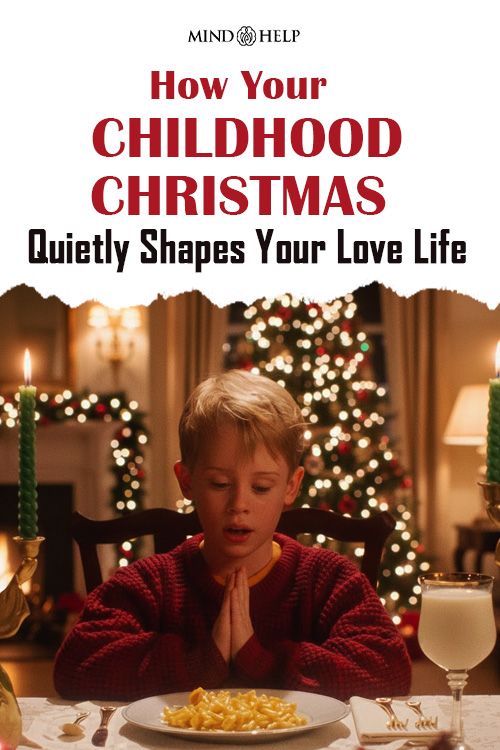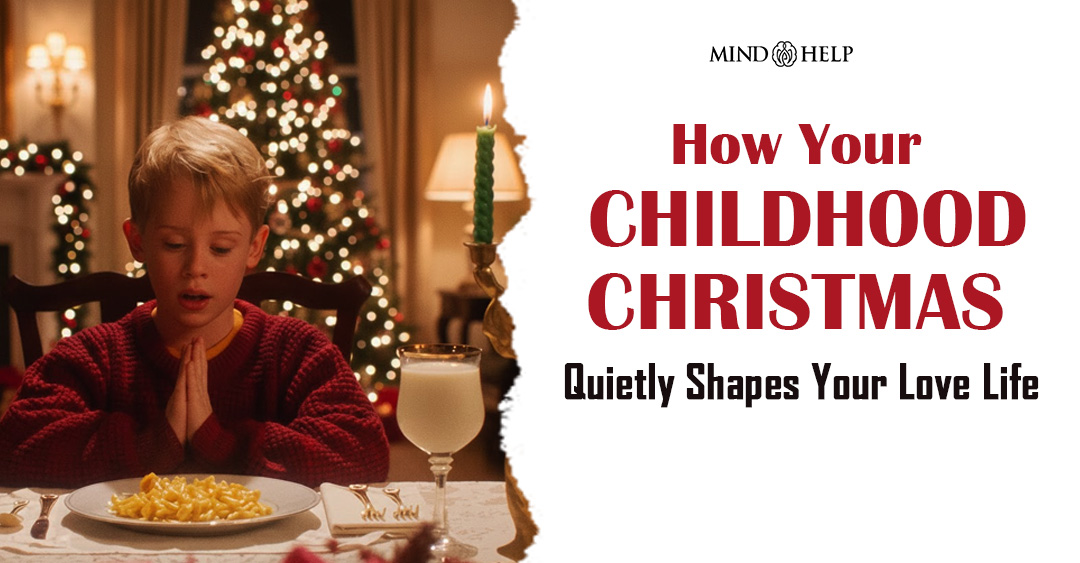
Childhood Christmas memories are rarely just about decorations, gifts, or family photos. A childhood Christmas quietly teaches us what love feels like when everyone is supposed to be together.
Long before we understood relationships, those early holidays shaped our emotional attachment styles. They showed us whether affection felt consistent or conditional, safe or unpredictable.
As adults, those lessons resurface through our emotional triggers during Christmas. The anxiety, the longing, the pressure to feel happy.
When you look closely, the link between childhood Christmas and attachment styles becomes impossible to ignore.
Whether the season feels comforting or overwhelming now often reflects the emotional patterns you learned back then, not something you are imagining.
Related: Why Holidays Are Stressful: 6 Ways Social Media Makes Christmas Emotionally Hard
The Link Between Your Childhood Christmas and Attachment Styles
There’s a very interesting link between childhood Christmas and attachment styles. Why? Because holidays can actually amplify your emotional patterns.
Christmas was often the one time of year when family dynamics were most intense. Expectations were high, emotions ran close to the surface, and love was either felt deeply or painfully missing.
For some children, Christmas meant consistency, warmth, and emotional availability. For others, it meant tension, unpredictability, or emotional neglect hidden behind the guise of celebrations.
These childhood experiences quietly shaped emotional attachment styles, teaching us how closeness works, whether emotional needs are safe to express, and how love behaves under pressure.
As adults, Christmas doesn’t just trigger nostalgia. It activates emotional triggers during Christmas tied to your earliest lessons about connection.
That’s why relationship conflicts, withdrawal, or emotional neediness often peak during the holidays.
You are not reacting to the present alone. You are responding to emotional patterns learned during your childhood Christmas.

How Your Childhood Christmas Still Affects the Way You Love
1. When Christmas Felt Safe: Secure Attachment
If Christmas felt emotionally stable, you likely developed a secure attachment style. Love showed up consistently. You observes the adults around you following through with their words and promises.
Even when things weren’t perfect, you felt emotionally held.
As an adult, this often translates into comfort with closeness. You can enjoy togetherness without losing yourself. You communicate needs without fearing abandonment. During the holidays, you are less reactive to stress and more flexible when plans change.
For example, suppose you and your partner host a Christmas party together. Something goes wrong the day of. Instead of spiraling, you laugh it off and adapt, trusting the relationship can handle small disappointments.
Secure attachment doesn’t mean Christmas is always magical. It means your nervous system learned that love remains steady even when the holiday doesn’t go exactly as planned.
2. When Christmas Meant Clinging: Anxious Attachment
If your childhood Christmas felt emotionally unpredictable, you may have developed an anxious attachment style. Love may have come with conditions. Attention felt inconsistent. You learned to stay alert for emotional shifts.
As an adult, this can show up as heightened emotional triggers during Christmas. You crave reassurance, closeness, and proof that you matter. When a partner seems distant or distracted, it can feel deeply personal.
For instance, your partner spends more time with their family during the holidays. Even without conflict, you feel overlooked and anxious, replaying small moments for meaning.
Anxious attachment isn’t about being “too much.” It’s about learning early that love required vigilance. Christmas intensifies this feeling, because it mirrors how you navigated emotionally volatile parents as a child.
3. When Christmas Meant Distance: Avoidant Attachment
If Christmas as a child felt overwhelming, tense, or emotionally invasive, avoidant attachment may have formed. You learned that emotional closeness comes with stress, conflict, or pressure.
As an adult, you tend to withdraw emotionally during the holidays, because more often than not, intimacy feels emotionally draining, so you choose independence over emotional intensity.
Emotional attachment styles like this often shows up as pulling away, getting irritable, or emotionally checking out.
Related: 10 Heartwarming Signs You Are With the Right Person This Christmas
For example, your partner wants meaningful holiday conversations, traditions, or emotional closeness. On the other hand, you feel like you are suffocating and quickly retreat into work, social media, or opt for some alone time instead.
Avoidant attachment isn’t coldness. It’s self-protection. What the holiday season does is, it activates memories of emotional overload, making you feel like distance is much safer than vulnerability.
4. When Christmas Was Chaotic: Disorganized Attachment
If your childhood Christmas was marked by both fear and warmth, conflict and affection, chances are you have a disorganized attachment style.
Love felt and still feels confusing to you, because as a child you saw that comfort and threat existed side by side.
As an adult, the holiday season can create some emotional push-pull within you. You crave for emotional and physical closeness however, you fear it at the same time. Emotional triggers during Christmas end up feeling too intense and unpredictable.
Suppose, you want intimacy with your partner, but when it arrives, you feel overwhelmed and pull away, only to miss it immediately after.
Disorganized attachment forms if your childhood was defined by mixed emotional signals. As an adult, your nervous system hasn’t learned a stable rhythm for connection, especially during emotionally loaded seasons like the holidays.
Okay, now that we have understood the link between childhood Christmas and attachment styles, let’s talk a bit about what you can do to deal with it and make the holiday season a bit easier on your heart.
How to Deal With Holiday Attachment Triggers
Understanding how your childhood Christmas influences your attachment style is the first step toward change. The goal isn’t to erase emotional reactions, but to recognize and understand them without letting them control your relationships.
Keep these reminders close to your heart, whenever you feel like Christmas is becoming a tad too “complicated”:
- Notice when your reactions feel bigger than the moment. Ask yourself if the feelings you are feeling right now, belongs to the present, or to earlier experiences.
- Communicate openly with your partner about your emotional attachment styles, and how they get triggered during Christmas.
- Set emotional boundaries that feel supportive, not avoidant.
- Create new traditions that feel safe and grounding.
- Most importantly, practice self-soothing when emotional triggers during Christmas arise.
Healing doesn’t require perfect holidays. It requires awareness, compassion, and the willingness to respond differently than you once had to.
Takeaway
The experiences you had as a child during Christmas, did not just shape your memories, it also shaped how you love.
When you understand the relationship between the two, you gradually learn to meet your emotional triggers during Christmas with awareness instead of judgment, and choose connections that feels safer, steadier, and more intentional.
Related: The Power of Secure Attachment in Parent-Child Relationships
How do you deal with emotional triggers during Christmas? Let us know in the comments down below!